Overview — Two Cities, Three Routes
Delhi and Mumbai are the twin anchors of modern India, connected by what is arguably the most important domestic travel corridor in the country. Approximately 1,400 km separates Indira Gandhi International Airport in Delhi from Chhatrapati Shivaji Maharaj International Airport in Mumbai -- a distance roughly equivalent to London to Barcelona or New York to Miami. Tens of thousands of people make this journey every single day, which means the infrastructure for covering it is mature, competitive, and surprisingly affordable.
You have three main options: fly (2 hours, the obvious choice for most travelers), take a train (15-17 hours, the classic Indian rail experience and arguably the more memorable journey), or drive (22-24 hours, rarely sensible but included here for completeness). Each has its own economics, its own advantages, and its own set of things you need to know before you book.
The right choice depends on your priorities. If you are optimizing for time and have the budget, fly -- it is quick, cheap if booked early, and straightforward. If you want the quintessential Indian travel experience and have a night to spare, the Rajdhani Express overnight sleeper is one of the great train journeys in the country -- meals included, berths that convert from seats to beds, and a rolling cross-section of India settling in around you for 16 hours. If you are road-tripping through Rajasthan and ending in Mumbai, the highway route makes geographic sense. For everyone else, this guide will help you pick the right option and avoid the booking mistakes that cost time and money.
By Flight — 2 Hours, 40+ Daily Options
The Delhi-Mumbai air corridor is the busiest domestic route in India and one of the busiest in the world. Over 40 flights operate daily between the two cities, with departures starting before 6 AM and the last flights leaving around 11 PM. This volume of competition means fares are relatively low -- provided you book at the right time.
Airlines operating the route. IndiGo dominates with 15-18 daily frequencies and is typically the cheapest option for economy class. Air India (now merged with Vistara as of late 2024) operates 8-12 daily flights with a mix of narrow-body and wide-body aircraft, occasionally offering better legroom on the A321neo configurations. Akasa Air, the newest entrant, runs 4-6 daily flights with competitive introductory pricing and a modern 737 MAX fleet. SpiceJet operates 4-5 daily flights, though their on-time performance has historically been less reliable. All airlines offer both direct and connecting flights; always book direct unless the savings are substantial -- connections through Jaipur or Ahmedabad add 3-4 hours and eliminate the primary advantage of flying.
Fare ranges. Economy class fares range from INR 3,500 to INR 12,000 depending on when you book and when you fly. The sweet spot is booking 3-4 weeks in advance for midweek departures (Tuesday through Thursday), where INR 3,500-5,000 fares are consistently available. Weekends (Friday evening and Sunday evening departures) are 30-50% more expensive. Festive seasons -- Diwali, Holi, Christmas, and summer holidays (May-June) -- push fares to INR 8,000-12,000 even with advance booking. Business class is available on Air India and Vistara at INR 12,000-25,000 and includes lounge access, priority boarding, and 2x baggage allowance. For economy travelers, the difference between airlines at the same fare is negligible -- IndiGo and Akasa are the most punctual, Air India has the best frequent flyer program (now integrated with Tata's loyalty ecosystem).
Which airports and terminals. In Delhi, all flights depart from Indira Gandhi International Airport (DEL). Terminal 3 (T3) handles Air India, Vistara, and some IndiGo flights. Terminal 1 (T1D) handles IndiGo (most domestic), SpiceJet, and Akasa Air. Always verify your terminal with your airline -- IndiGo splits flights between both terminals. In Mumbai, international and select domestic flights arrive at Terminal 2 (T2), while most budget domestic flights land at Terminal 1 (T1). The terminals are 4 km apart, connected by a free shuttle bus that runs every 20-30 minutes but takes 10-15 minutes in traffic. If you have a connecting flight, verify both terminals before planning your transfer time.
Best booking strategies. Use Google Flights or Skyscanner to compare across all airlines simultaneously. Set fare alerts for your travel dates 6-8 weeks out. The cheapest fares typically appear 21-28 days before departure and start climbing after that. Early morning flights (6-8 AM departures) and late night flights (after 9 PM) are usually INR 500-1,000 cheaper than midday departures. If you are flexible on dates, the price calendar view on Google Flights will show you the cheapest day to fly within your travel window. Direct booking on the airline's website or app is almost always the same price as third-party booking sites, but direct booking gives you better customer service if things go wrong (delays, cancellations, rebooking).
Practical flight day tips. Delhi airport can be chaotic during peak hours. Arrive 2 hours before domestic departures at T3, 1.5 hours at T1D. The Delhi Metro Airport Express Line connects New Delhi Railway Station to T3 in 20 minutes (INR 60) -- the most reliable way to reach the airport if you are coming from central Delhi. In Mumbai, the Aqua Line (Metro Line 3) now connects the airport area to parts of the city; check current station openings as the line has been rolling out in phases. Prepaid taxi counters at both airports offer fixed-rate fares without surge pricing.
By Train — The Classic Indian Rail Experience
Taking the train from Delhi to Mumbai is not just about getting from A to B -- it is one of the defining travel experiences in India. The overnight journey, the chai vendors moving through the coaches at dawn, the gradual landscape shift from North Indian plains to the Deccan Plateau and finally the Western Ghats, and the ritual of meals served at your berth -- this is the stuff that makes Indian rail travel legendary. The route is served by some of Indian Railways' finest trains, and if you plan your booking correctly, it is both comfortable and affordable.
Mumbai Rajdhani Express (Train No. 12951/12952). This is the flagship train on the route and the one most travelers should target. Departing from New Delhi Railway Station at 4:25 PM, it arrives at Mumbai Central station at approximately 8:35 AM the next morning -- roughly 16 hours. The Rajdhani is a fully air-conditioned train with three classes: 3AC (three-tier air-conditioned, 6 berths per bay, INR 1,500-2,200), 2AC (two-tier air-conditioned, 4 berths per bay with curtains, INR 2,200-3,200), and 1AC (first class air-conditioned, 2 or 4 berths per coupe with a lockable door, INR 3,500-4,500). All fares include meals: evening snacks and tea after departure, a full dinner (typically a choice of veg or non-veg thali), early morning tea, and breakfast before arrival. The food is decent -- not restaurant quality, but hot, fresh, and included in the ticket price. Bedding (sheets, blanket, pillow) is provided in all classes.
August Kranti Rajdhani Express (Train No. 12953/12954). The "second Rajdhani" on this route departs from Hazrat Nizamuddin station in Delhi at 5:10 PM and arrives at Mumbai Central at approximately 10:55 AM -- about 17 hours and 45 minutes, slightly slower than the Mumbai Rajdhani. The advantage of this train is that Hazrat Nizamuddin station is significantly less chaotic than New Delhi Railway Station, tickets are marginally easier to get (lower demand), and the fares and service are identical. If the Mumbai Rajdhani is fully booked, the August Kranti is your next best option and the experience is virtually indistinguishable.
Tejas Express. The Tejas runs between Delhi and Mumbai with modern Tejas-class coaches that feature individual screens, USB charging ports, and improved seating. It operates on select days and offers a more premium experience than the standard Rajdhani, though the route and timing can vary by season. Check the IRCTC website for current schedules, as this service has undergone several timetable changes. When available, it is a good option for travelers who want a step up in comfort from the Rajdhani without flying.
Duronto Express (Train No. 12261/12262). The Duronto is a non-stop express (no intermediate station stops) between Delhi and Mumbai. Departing New Delhi at 11:10 PM, it arrives at Mumbai Central at approximately 4:40 PM the next day -- about 17.5 hours. The Duronto offers the same class structure as the Rajdhani (3AC, 2AC, 1AC) with included meals. The late-night departure means you board, sleep, and wake up deep in Maharashtra -- a good option if you have a full day in Delhi before leaving. The lack of intermediate stops means slightly more sleep and fewer disturbances. Fares are comparable to the Rajdhani.
Which class to book. For most travelers, 2AC is the sweet spot. It provides a genuine berth (not a narrow shelf like 3AC upper berths), curtains for privacy, less crowded bays (4 berths instead of 6), and the same meal service as 1AC at a significantly lower price. 3AC is perfectly adequate if you are on a budget -- the berths are identical in width and length, but with six people in each bay instead of four, it is louder and less private. The upper berths in 3AC are slightly narrower and harder to climb into. 1AC is worth the premium only if you value a lockable door and complete privacy -- the coupes (2-berth or 4-berth private compartments) are the closest thing Indian Railways offers to a hotel room on rails. For solo travelers, 2AC is the consensus recommendation.
Booking via IRCTC. All Indian Railways tickets must be booked through the official IRCTC platform (irctc.in or the IRCTC Rail Connect app). Foreign nationals can register with their passport number. Booking opens 120 days (4 months) before the journey date. For the Delhi-Mumbai Rajdhani, tickets in all classes fill up within days of opening, especially during peak season (October-March). Book as early as possible. If your preferred train is sold out, you will be placed on a waitlist (WL) or given a RAC (Reservation Against Cancellation) status -- WL tickets often confirm as other passengers cancel, especially in 2AC and 3AC. A waitlist position of WL1-WL15 has a reasonable chance of confirming; WL30+ is risky.
Tatkal booking. If you need tickets at short notice, the Tatkal quota releases at 10:00 AM IST (for AC classes) and 11:00 AM IST (for non-AC) one day before departure. Tatkal tickets include a surcharge of INR 300-400 for AC classes. Competition is fierce on the Delhi-Mumbai route -- tickets can sell out in 2-3 minutes. Have all passenger details pre-filled, payment method saved, and be logged in before 10 AM. Premium Tatkal opens at 8 AM the previous day with higher fares but slightly less competition. A third option is the "current booking" at the station on the day of departure, but this is generally not recommended for overnight trains as availability is unpredictable.
Delhi to Mumbai Transport Options
| Mode | Duration | Cost Range | Comfort | Best For |
|---|---|---|---|---|
| Flight (Economy) | 2 hours | INR 3,500-12,000 | Standard airline | Time-sensitive travelers, business trips |
| Rajdhani Express (2AC) | 15-17 hours | INR 2,200-3,200 | Sleeper berth, meals included | Budget travelers, rail experience seekers |
| Rajdhani Express (1AC) | 15-17 hours | INR 3,500-4,500 | Private coupe, meals included | Comfort-first travelers, couples |
| Duronto Express (2AC) | 17-18 hours | INR 2,000-3,000 | Non-stop sleeper, meals included | Night departure preference, fewer stops |
| Flight (Business) | 2 hours | INR 12,000-25,000 | Lounge + priority boarding | Business travelers, loyalty seekers |
| Volvo Sleeper Bus | 22-26 hours | INR 1,200-2,500 | Semi-sleeper/sleeper berth | Ultra-budget, flexible schedule |
| Self-Drive | 22-24 hours | INR 5,000-8,000 (fuel + tolls) | Your own car | Road trip with Rajasthan stops |
If you choose the self-drive option, stop in Jaipur en route for forts and palaces.
By Road — 1,400 km via NH-48
Let us be upfront: driving from Delhi to Mumbai is not recommended for most tourists. The distance is punishing -- 1,400 km of highway driving that takes a minimum of 22 hours of pure driving time, and realistically requires splitting into two days with an overnight stop. The fatigue factor alone makes this a poor choice if your goal is simply to get from one city to the other. That said, the Delhi-Mumbai highway (NH-48, also marked as NH-8 on older maps) is one of India's better highways, and if you are incorporating stops along the way, the road trip can be a truly rewarding experience.
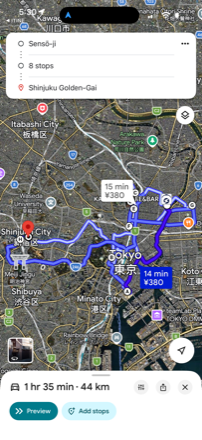
The route. The standard highway routing goes Delhi to Jaipur (270 km, 4-5 hours) to Udaipur (660 km from Delhi, 10-12 hours) to Ahmedabad (940 km from Delhi, 14-16 hours) to Mumbai (1,400 km from Delhi, 22-24 hours). An alternative route goes Delhi to Jaipur to Ahmedabad directly, skipping Udaipur and shaving off about 2 hours. The highway is primarily 4-6 lanes, with stretches of expressway-grade road between Delhi and Jaipur (the new Delhi-Jaipur Expressway is excellent) and between Ahmedabad and Mumbai (the Mumbai-Ahmedabad Expressway is partially complete). Toll charges along the full route total approximately INR 1,500-2,000. Fuel costs for a standard sedan come to INR 3,500-5,000 for the full journey.
Bus options. If you want to go by road but not drive yourself, several private bus operators run overnight Volvo sleeper and semi-sleeper services between Delhi and Mumbai. Operators include VRL Travels, Neeta Tours, and several Rajasthan State Road Transport Corporation (RSRTC) services. Fares range from INR 1,200 for a semi-sleeper seat to INR 2,500 for a private Volvo sleeper berth. The journey takes 22-26 hours depending on the operator and route. MSRTC (Maharashtra State Road Transport Corporation) runs a handful of Shivneri and Ashwamedh AC buses, though these are less frequent and less comfortable than the private operators. Book via RedBus or AbhiBus for the widest selection. The honest assessment: even the best bus on this route is significantly less comfortable than a 3AC train berth, takes longer, and costs about the same. Buses make sense only if all train and flight options are sold out.
If you do drive. Leave Delhi by 5 AM to clear the city before rush hour. The stretch through Gurugram is the worst traffic bottleneck on the entire route -- budget 45-60 minutes for what should be a 20-minute drive. Once past Gurugram and onto the expressway, the road opens up. Stop for breakfast in Neemrana (2 hours from Delhi) at the Neemrana Fort-Palace if you want a memorable start to the drive. The Jaipur bypass is well-marked and avoids city traffic. Between Jaipur and Udaipur, the road narrows and passes through the Aravalli hills -- beautiful but slower. If you are doing the full drive in one shot (not recommended), plan fuel stops at major highway plazas every 3-4 hours. Indian highway rest stops have improved dramatically -- clean bathrooms, decent food courts, and reliable fuel availability are now standard on NH-48. Drive only during daylight hours. Indian highways after dark are seriously dangerous -- unlit trucks, stray animals, and poor lane discipline make night driving on this route a serious safety concern.
Which Option Should You Choose?
If time is your priority: Fly. A 2-hour flight, even with 2 hours of airport overhead on each end, gets you from central Delhi to central Mumbai in 6-7 hours door-to-door. No other option comes close. Book 3-4 weeks ahead for the best fares and you will pay INR 3,500-5,000 -- less than a 1AC train ticket.
If budget is your priority: Take the Rajdhani Express in 3AC. At INR 1,500-2,200 including three meals and bedding, it is the cheapest comfortable option by a significant margin. You depart in the late afternoon, eat dinner, sleep, eat breakfast, and arrive in Mumbai by mid-morning. The overnight timing means you are not "losing" a day of travel -- you are converting travel time into sleep time. This is honestly one of the best-value long-distance travel options anywhere in the world.
If the experience matters: Take the Rajdhani in 2AC or 1AC. Indian train travel is a cultural experience that flying simply cannot replicate. The shared meals, the conversations with fellow travelers, the chai vendor at 5 AM, the gradual landscape change from the arid North Indian plains to the lush Western Ghats -- these are the memories that stick. If you are visiting India for the first time and have the time, doing the Delhi-Mumbai journey by Rajdhani is strongly recommended. You will arrive in Mumbai with a story, not just a boarding pass stub.
If you are combining destinations: Drive or break the train journey. If your India itinerary includes Jaipur, Udaipur, or Ahmedabad between Delhi and Mumbai, the road route makes geographic sense. Alternatively, you can break the train journey by booking separate tickets: Delhi to Jaipur (Shatabdi Express, 4.5 hours), spend a few days in Rajasthan, then Ahmedabad to Mumbai (Shatabdi or flight). This approach costs more than a single Rajdhani ticket but lets you see more of western India.
Pro Tips for This Route
Flight prices drop significantly for Tuesday and Wednesday departures. A fare that costs INR 7,000 on Sunday evening can be INR 3,500 on Tuesday morning. If your dates are flexible, shift your departure by a day or two and check the price calendar on Google Flights.
The Rajdhani Express includes all meals in the ticket price -- dinner, early morning tea, and breakfast. The food is freshly prepared at railway catering kitchens and served hot at your berth. You can request vegetarian or non-vegetarian when the catering staff comes through. Bring your own snacks as supplements, not replacements.
IRCTC Tatkal booking for AC classes opens at exactly 10:00 AM IST, one day before departure. Log in by 9:50 AM, pre-fill all passenger details, and have UPI or a saved card ready. You have a 2-3 minute window before tickets sell out on this route.
On the Rajdhani Express, request a window seat on the left side of the train (when facing the direction of travel) for the best scenery through the Aravalli hills and the Gujarat countryside. Berth preference can be set during booking on IRCTC.
Things to watch out for
- Last-minute flight booking on this route means overpaying -- fares double or triple within the final 7 days. Book at least 2-3 weeks ahead.
- General class (unreserved) train tickets at INR 400-500 sound cheap but involve no reserved seat, no AC, extreme overcrowding, and 24+ hours of discomfort. Always book at least 3AC for overnight journeys.
- Overnight sleeper buses between Delhi and Mumbai are louder, bumpier, and less restful than a 3AC train berth. They take longer and cost about the same. Buses are a last resort.
- Travel agents offering "confirmed tickets" at a premium are either using Tatkal quota with a 30-50% markup or dealing in fraudulently booked tickets. Book directly through IRCTC or the airline website.
Best hack for this route: If the Rajdhani is fully booked, check the August Kranti Rajdhani (Train 12953) from Hazrat Nizamuddin station. It runs the same route to Mumbai Central, departs 45 minutes later, and has lower demand because most travelers only search for the Mumbai Rajdhani by name. The service, fares, and comfort are identical.
Arriving in Mumbai
How you arrive determines your first logistical challenge. The Rajdhani terminates at Mumbai Central (Western Line, central Mumbai). Some trains arrive at CSMT, a UNESCO World Heritage Site in the Fort area, closer to South Mumbai hotels. Flights land at Terminal 1 or Terminal 2 at CSIA in the northern suburbs. From any arrival point, prepaid taxis, Uber, and Ola are available. For detailed station-by-station directions, onward transport options, fares, and timing advice, see our Mumbai transport guide and airport guide.
Booking Tips — When and How to Book
Flights: 3-4 weeks ahead. The pricing algorithm for Delhi-Mumbai flights follows a predictable curve. Fares are lowest 21-28 days before departure, stable 14-21 days out, and start climbing sharply in the final 7 days. Set fare alerts on Google Flights or Skyscanner for your preferred dates. If you see an economy fare below INR 4,000, book it -- that is a good price and unlikely to drop further. The cheapest consistent fares are on IndiGo and Akasa Air for early morning (6-7 AM) and late night (after 9 PM) departures. Mid-day business traveler flights (8-10 AM, 5-7 PM) are the most expensive.
Trains: 120 days ahead. IRCTC opens bookings exactly 120 days (4 months) before the date of departure at 8:00 AM IST. For the Mumbai Rajdhani, 2AC and 1AC tickets in peak season (October-March) fill up within the first week of opening. Set a reminder and book on the opening day for guaranteed availability. During off-peak season (April-September, excluding holidays), you can usually find availability up to 30-45 days before departure. The IRCTC Rail Connect app is faster than the website for booking -- use it on a reliable mobile connection.
The Tatkal system explained. Tatkal (meaning "immediate" in Hindi) is Indian Railways' last-minute booking quota. A limited number of berths in each class are held back from regular booking and released for Tatkal booking at 10:00 AM IST (AC classes) and 11:00 AM IST (non-AC), exactly one day before departure. Tatkal fares include a surcharge (INR 300 for 3AC, INR 400 for 2AC/1AC) on top of the regular fare. On the Delhi-Mumbai route, Tatkal tickets in AC classes sell out within 2-3 minutes of opening. Success requires: being logged into IRCTC before 10 AM, having all passenger details pre-filled, having UPI or a saved credit/debit card for instant payment, and a fast internet connection. If regular Tatkal fails, Premium Tatkal opens at 8:00 AM the day before (higher fares, slightly less competition). Both quota types are non-refundable once booked.
Alternative booking strategies. If the Rajdhani is sold out and Tatkal looks hopeless, consider these: book the August Kranti Rajdhani (lower demand, identical service), check the Duronto Express (different departure time, often has availability when Rajdhani does not), or look at the Golden Temple Mail (slower at 21-23 hours but often has availability in 2AC and 3AC). You can also check for Suvidha Special trains that Indian Railways runs on this route during peak demand periods -- these are dynamically priced but often available when regular trains are sold out.
Stopover Options — Breaking the Journey
If you have the time, breaking the Delhi-Mumbai journey into segments lets you see more of western India without backtracking. The highway and rail corridor between the two cities passes through or near several major destinations that deserve their own time.
Jaipur (270 km from Delhi, 4-5 hours by road or train). The Pink City is the most popular stopover on this route for good reason. The Delhi-Jaipur Shatabdi Express covers the distance in 4.5 hours with morning and evening departures. Jaipur deserves 2-3 full days for Amber Fort, Hawa Mahal, the City Palace, Nahargarh Fort, and the bazaars of the old city. From Jaipur, you can continue to Mumbai by flight (1.5 hours, multiple daily options on IndiGo and Air India) or train (Jaipur-Mumbai Superfast Express, 16-18 hours overnight). Adding Jaipur to a Delhi-Mumbai journey extends your total travel time by 2-3 days but gives you one of India's most photogenic cities as a bonus.
Udaipur (660 km from Delhi, 10-12 hours by road). The "City of Lakes" sits in the Aravalli hills of southern Rajasthan. It is not directly on the Delhi-Mumbai highway but makes sense as a detour if you are driving or breaking the journey by train. The Chetak Express runs overnight from Delhi to Udaipur (12-14 hours). Udaipur is worth 2-3 days for Lake Pichola, the City Palace, Jagdish Temple, and the old city markets. From Udaipur, daily flights connect to Mumbai (1.5 hours on IndiGo or Air India). The Delhi-Jaipur-Udaipur-Mumbai loop is one of the classic India itineraries, covering the Golden Triangle plus Udaipur before ending in Mumbai.
Ahmedabad (940 km from Delhi, 14-16 hours by road or 8-10 hours by train). Gujarat's largest city sits roughly two-thirds of the way between Delhi and Mumbai on the highway and rail corridor. The Rajdhani Express stops briefly at Ahmedabad Junction on its way to Mumbai -- you cannot break the journey on a single Rajdhani ticket, but you can book separate tickets (Delhi to Ahmedabad, then Ahmedabad to Mumbai). Ahmedabad deserves at least a full day for the Sabarmati Ashram (Mahatma Gandhi's headquarters during the independence movement), the old city's pol (neighborhood) architecture, the Adalaj Stepwell, and the street food -- Gujarati thali restaurants here are extraordinary. From Ahmedabad, Mumbai is 6-7 hours by road or 7-8 hours by the Shatabdi Express, or 1.5 hours by flight.
Practical routing. The most efficient stopover itinerary is Delhi → Jaipur (Shatabdi Express, 4.5 hours) → 2 days in Jaipur → Jaipur to Mumbai (flight, 1.5 hours). This adds only 2 days to your overall journey and gives you Rajasthan's highlight city without a grueling multi-day road trip. The most ambitious version is Delhi → Jaipur → Udaipur → flight to Mumbai, which covers the best of Rajasthan in 5-6 additional days and is one of the most rewarding travel routes in India.