Mumbai Itinerary 2026 — Your Complete Trip Planner
Whether you have 24 hours or 3 full days, we have a tested-by-locals itinerary that skips the tourist traps and gets you straight to the real Mumbai -- street food stalls that Mumbaikars queue for, heritage walks without the crowds, and neighborhoods the guidebooks haven't caught up with yet.
4+
Itineraries
60+
Spots Covered
₹2,000/day
Budget From
March 2026
Last Updated
Powered by ITINE
Get this guide as a tappable itinerary
Day-by-day plan, audio tours, and one-tap Google Maps — completely free.
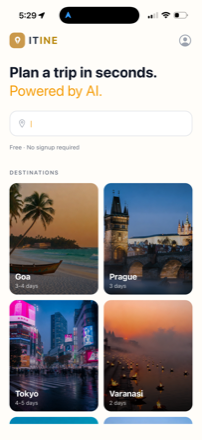
Destinations
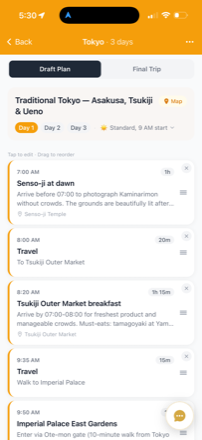
Your Itinerary
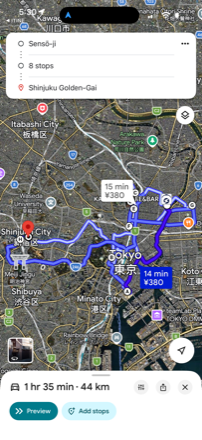
Google Maps
Mumbai doesn't ease you in. It hits you with humidity, honking, and the smell of frying vada pav the moment you step outside the airport. And that's exactly what makes it one of the most electrifying cities on Earth.
The problem with most Mumbai travel guides? They list 50 "must-see attractions" without telling you that half of them are skippable, that traffic between them will eat your day alive, and that the best experiences aren't in any guidebook at all.
We built these itineraries differently. Every route has been walked and re-walked by locals who know which side of Marine Drive to sit on at sunset, which Irani cafe hasn't compromised on their brun maska recipe, and which "heritage walk" is actually just a guy with a megaphone herding tourists past buildings they could Google.
Pick your duration below. Each plan includes exact timings, transport instructions, costs in rupees, and the insider context that turns a good trip into an unforgettable one.
How Many Days in Mumbai?
Every itinerary is self-contained, locally tested, and designed to eliminate wasted time. Pick the duration that fits your schedule -- each one covers the right amount without trying to cram in everything.
Our Recommendation
First time in Mumbai? Start with the 2-day itinerary. It gives you the iconic South Mumbai experience on Day 1 plus the real, lived-in suburban side on Day 2 -- the combination that turns "I visited Mumbai" into "I actually know Mumbai." Add a third day if you want to explore Elephanta Caves or go deeper into the food scene.
What Can You See in Mumbai?
Mumbai isn't a one-note city. Whether you're here for the Victorian Gothic architecture, the street food that costs less than a dollar, the after-dark energy, or just a quiet beach -- there's an itinerary thread for you.
Heritage & History
- Chhatrapati Shivaji Terminus (CSMT) -- UNESCO World Heritage
- Gateway of India & Taj Mahal Palace Hotel
- Elephanta Caves (1-hour ferry from Gateway)
- Dr. Bhau Daji Lad Museum -- Mumbai's oldest museum
- Rajabai Clock Tower at Mumbai University
Food & Street Eats
- Vada Pav trail -- Ashok (Kirti College) to Anand (Vile Parle)
- Irani cafes -- Yazdani Bakery, Kyani & Co, Britannia
- Mohammed Ali Road night food crawl (during Ramadan: unmissable)
- Ghatkopar Khau Galli -- the suburb food street locals love
- Chowpatty bhelpuri at sunset (ask for 'teekha')
Nightlife & Culture
- Bandra bars -- Pali Village Cafe, The Nutcracker, Bastian
- Lower Parel rooftops -- Aer, Toit Taproom, Woodside Inn
- Prithvi Theatre -- legendary indie theatre (Juhu)
- Carter Road night walk & late-night kebab stalls
- Blue Tokai coffee house circuit (for the non-drinkers)
Nature & Beaches
- Marine Drive -- the 3-km Queen's Necklace arc
- Juhu Beach -- Bollywood-star-spotting at sunset
- Sanjay Gandhi National Park -- leopards + Kanheri Caves
- Bandra-Worli Sea Link -- best seen from Dadar Chowpatty
- Powai Lake -- the calm side of suburban Mumbai
Plan by Travel Style
The best Mumbai itinerary depends on who you're traveling with. A couple's sunset at Marine Drive hits differently than chasing a toddler on Juhu Beach. We've built specific plans for each.
Understanding Maximum City
Mumbai isn't a pretty city in the Instagram sense. It's a city that earns your respect. The Victorian Gothic architecture of South Mumbai sits next to crumbling chawls. A ₹15 vada pav from a street cart tastes better than most ₹1,500 restaurant meals. The local train system moves 7.5 million people daily -- more than the entire population of some countries -- and somehow it works.
What makes Mumbai different from every other Indian city is its speed. Mumbaikars walk faster, eat faster, and make decisions faster. The city runs on a culture of efficiency born from the fact that 20 million people share an island that was never meant to hold them. This isn't chaos -- it's a system so complex it looks like chaos to outsiders.
The best way to experience Mumbai is to surrender to its pace. Don't plan every minute. Leave room for the chai tapri conversation that turns into a dinner invitation, the festival procession that blocks your route but gives you the best 20 minutes of your trip, the random recommendation from a taxi driver that leads to the best kebab of your life.
Our itineraries give you the structure -- but the magic happens in the gaps. That's Maximum City.
20.7M
Population
16+
Languages
7.5M
Daily Train Riders
~250K
Street Food Stalls
Everything Else You Need
Beyond the day-by-day itineraries, these guides cover the logistics that actually make or break a Mumbai trip: where to sleep, how to move, what to eat, and how much it all costs.
Practical Planning Notes
The details that most guides forget to mention -- but will save you time, money, and frustration on the ground.
Getting to Mumbai
Chhatrapati Shivaji Maharaj International Airport (BOM) is India's busiest. Terminal 2 handles international flights; Terminal 1 is domestic. They're 4 km apart -- allow 25 minutes between them if connecting. From the airport to South Mumbai (Colaba/Fort), expect 60-90 minutes by taxi (₹600-900 by prepaid counter, ₹400-600 by Uber/Ola). To Bandra, it's 20-30 minutes (₹250-400). The metro from T1 to Western suburbs is now operational -- ₹40, 25 minutes, zero traffic.
Moving Around the City
Mumbai's local trains are the fastest way to travel north-south. Western Line (Churchgate to Virar) and Central Line (CSMT to Kalyan) are the two main corridors. Peak hours (8:30-10:30 AM and 5:30-8 PM) are genuinely intense -- standing room only, bodies pressed together. Travel off-peak and it's efficient, cheap (₹5-15), and the most authentic Mumbai experience you can have. Download the m-Indicator app for routes and times. For north-to-south trips during peak hours, Uber/Ola is your fallback -- but budget 2x the Google Maps estimate for traffic.
Money & Payments
UPI (Google Pay, PhonePe) is king in Mumbai -- even chai stalls accept it. International visitors can now get UPI access through select banks or use international cards at most mid-range restaurants and shops. Street food is still largely cash -- carry ₹1,000-2,000 in small denominations (₹50, ₹100 notes). ATMs are everywhere; HDFC, ICICI, and SBI charge the lowest foreign transaction fees. Don't exchange money at the airport -- rates are 5-8% worse than Thomas Cook or BookMyForex offices in Fort.
Weather & What to Wear
Mumbai has three seasons: hot (March-May, 33-38 degrees C and humid), monsoon (June-September, 28-32 degrees C with daily heavy rain), and "winter" (October-February, 22-32 degrees C and pleasant -- this is when you come). Year-round, dress light and breathable. Cotton beats everything. Shoes you don't mind getting dirty -- Mumbai's sidewalks are unpredictable. If visiting during monsoon, waterproof everything: phone, documents, shoes. The city floods, drains, and carries on -- you should too.
Safety & Common Sense
Mumbai is statistically India's safest major city. South Mumbai and Bandra are active until 2-3 AM with restaurants, bars, and foot traffic. Petty theft is rare but keep phones and wallets secure in crowded trains. Women travelers: the first compartment of every local train is women-only -- use it during rush hour, it's faster and more comfortable. Auto-rickshaws (suburbs only, not South Mumbai) should always run on the meter -- say "meter se" before getting in. If they refuse, walk to the next one. They always agree eventually.
Mumbai Itinerary FAQs
Day Trips & Deep Dives
Ready to Plan Your Mumbai Trip?
Pick your duration, pack light, and leave room for the unplanned. Mumbai rewards the curious. Every itinerary comes with exact timings, real costs, and the local knowledge that turns a trip into a story worth telling.