Mumbai 3-Day Itinerary — Best 3-Day Trip Plan for 2026
Heritage. Street food. Art. Nightlife. A day trip. Three days to fall in love with Maximum City. This isn't a highlight reel — it's the full experience, time-blocked and traffic-hacked so you never waste a minute stuck in a cab wondering if you're doing Mumbai wrong.
Vibe
Everything
Budget
₹8,000-15,000
Transport
Train + Auto + Ferry
Best For
Deep Divers
Duration
3 Days
Powered by ITINE
Get this guide as a tappable itinerary
Day-by-day plan, audio tours, and one-tap Google Maps — completely free.
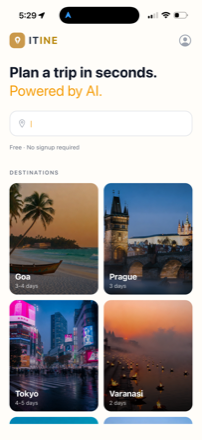
Destinations
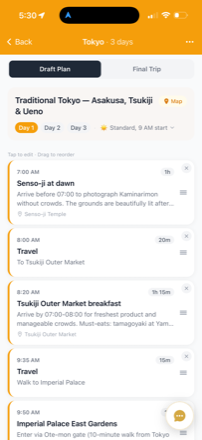
Your Itinerary
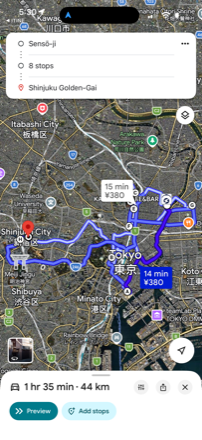
Google Maps
Three days in Mumbai is the Goldilocks window. One day is a sprint — you see the hits but miss the heartbeat. A week and the city starts to feel routine. But three days? Three days lets you peel back the layers: colonial grandeur on Day 1, the raw energy of bazaars and street food on Day 2, and on Day 3, you go beyond the city to ancient island caves before coming back for a farewell sunset that will make you seriously consider extending your trip.
Every block is optimized for timing, transport, and energy levels. Each “Anchor” is your main destination, the “Side Quest” is the detour worth taking, and “Fuel” is where you eat — no TripAdvisor tourist restaurants, only places Mumbaikars actually go.
Day 1 in Mumbai: South Mumbai Heritage Walk
Colonial architecture, art districts, and the Queen's Necklace
The Grand Entrance
First impressions count — and Mumbai's opening act is a Gothic masterpiece built by the British and reclaimed by the city.
CSMT to Flora Fountain Walking Route
Start at Chhatrapati Shivaji Maharaj Terminus — the UNESCO-listed Gothic Revival station that looks like a Victorian cathedral collided with a Mughal palace. Walk inside the booking hall at 7 AM when the morning light hits the stained glass and the vaulted arches glow amber. Then head south on Victoria Terminus Road toward Flora Fountain, passing the imposing BMC headquarters (Mumbai's city hall, a castle-like sandstone building most tourists walk right past). This 2-km corridor is the densest collection of colonial architecture in India — every block has a building that would be a national monument anywhere else. Flora Fountain itself is a 150-year-old ornamental fountain at the junction of five roads, marking the heart of the Fort business district. Early morning is magical here — the streets are quiet, the chai stalls are firing up, and the city hasn't yet hit its stride.
St. Thomas Cathedral
Mumbai's oldest British-era building, consecrated in 1718 — older than the city itself as a British settlement. This isn't a tourist-facing attraction, which is exactly why it's worth 20 minutes. Step inside for remarkable stained glass, memorial tablets to East India Company soldiers, and the kind of air-conditioned silence that feels impossible in Mumbai. The churchyard has ancient banyan trees and tombstones with stories. It's a quiet, contemplative pause before the sensory assault of the rest of your day.
5 min from Flora Fountain from anchorYazdani Bakery
Order: Brun maska + Irani chai + Apple cake
₹120Traffic Hack
Take the Harbour Line to CSMT for the most scenic station arrival. Platform 18 has the best view of the dome. The train ride itself costs ₹5-10 and gives you a taste of Mumbai's legendary commuter culture. Arrive before 7:30 AM to beat the office crowd — CSMT processes 3 million commuters daily and gets chaotic by 8 AM.
Bail-Out Option
Skipping the walk? → Uber from any suburb to CSMT costs ₹300-500. The ride takes 30-60 min depending on traffic. Early morning (before 7 AM) is traffic-free.
The Art Quarter
Mumbai's cultural nucleus — where century-old galleries meet contemporary Indian art in a tree-lined precinct that feels like a different city.
Kala Ghoda Art Precinct
Kala Ghoda ('Black Horse' — named after a now-removed statue) is Mumbai's answer to SoHo or Le Marais. Start at Jehangir Art Gallery, India's most prestigious contemporary art space — free entry, rotating exhibitions, and the kind of place where you'll see India's next big artist before the rest of the world catches on. Walk across to the NGMA (National Gallery of Modern Art) for the permanent collection of Indian modern masters: Husain, Souza, Raza. Then the crown jewel: Chhatrapati Shivaji Maharaj Vastu Sangrahalaya — Mumbai's main museum, housed in an Indo-Saracenic building with dome. The Gandhara sculpture gallery on the ground floor alone is worth the ₹300 entry fee. The miniature paintings collection upstairs is one of India's finest. Budget 90 minutes for the museum if you're an art person, 45 if you're not. The entire Kala Ghoda precinct is walkable, lined with independent bookshops, design studios, and some of Mumbai's best cafes.
David Sassoon Library & Reading Room
One of Mumbai's most beautiful buildings — a cream-colored neo-classical facade with a garden terrace that's one of the city's best-kept secrets. The reading room is open to visitors for ₹50, and the interior is pure 19th-century academia: wood paneling, arched windows, and the kind of hushed atmosphere where you can hear your own thoughts. Even if you don't go inside, the garden seating is one of the best spots in Fort to sit with a book or just people-watch.
2 min walk from anchorThe Table (Fort location)
Order: Lunch prix fixe + Fresh juice
₹1,200Traffic Hack
Museum is closed Mondays. Plan Day 1 on any day except Monday. If you're visiting on a weekend, the museum gets crowded after noon — go first, then circle back to the galleries. Weekday mornings are blissfully empty.
Bail-Out Option
Museum fatigue? → Skip NGMA and walk to Rhythm House music store nearby. It's one of Mumbai's oldest record shops (since 1946) and has a curated vinyl section. Or grab a cold coffee at Kala Ghoda Cafe and sit in their courtyard.
Museum & Gallery Etiquette
- Photography is prohibited inside most galleries and the museum's sculpture halls. Your phone camera will get you a stern warning. Respect it — these are national treasures.
- Maintain silence in the David Sassoon Library reading room. It's an active library, not a tourist attraction. Scholars actually use it.
- At Jehangir Gallery, don't touch the artwork. Seems obvious, but people lean in for selfies and bump into canvases. The gallery staff will ask you to leave.
- Museum entry for Indian nationals is ₹85, for foreigners ₹300. Student discounts available with valid ID. The audio guide (₹100) is surprisingly good.
The Waterfront Evening
Gateway of India to Marine Drive — this is the stretch that makes people fall in love with Mumbai, and you're catching it at golden hour.
Gateway of India → Marine Drive Sunset Walk
Start at the Gateway of India — the 26-metre basalt arch completed in 1924 to commemorate King George V's visit. Take your time here: the waterfront has boat vendors (skip the overpriced tourist boats), the Taj Mahal Palace Hotel across the street is worth walking through the lobby (yes, you can just walk in), and the people-watching is elite. Then grab an Uber or walk (if you have the energy) to Marine Drive for golden hour. The 3.6-km promenade curves along Back Bay like a concrete necklace — which is exactly why it's called the Queen's Necklace when the streetlights come on after dark. Walk north from Nariman Point toward Girgaon. Sit on the tetrapods (concrete wave-breakers). Watch the cricket. Let the sea spray hit your face. Watch the sunset paint the art-deco skyline orange. This is the moment you'll remember when someone asks about Mumbai.
Colaba Causeway Quick Shop
A 30-minute speed run through Mumbai's most famous street market. Best buys: leather bags (negotiate from 50% of asking), silver jewelry (Afghani traders near the Regal Cinema end), vintage maps of Bombay (the bookstalls near Leopold Cafe), and quirky souvenirs. The trick is knowing when to stop — Colaba Causeway can absorb an entire afternoon if you let it. Set a timer. Buy what catches your eye in the first pass. Don't double back.
5 min from Gateway from anchorGirgaon Chowpatty Beach Food
Order: Bhel puri + Sev puri + Kulfi falooda
₹200Traffic Hack
Colaba to Marine Drive: walk via Regal Cinema and Oval Maidan (20 min, scenic). Skip the cab — it's faster on foot during evening rush hour. The Oval Maidan route gives you the art-deco facade row on your left and the Victorian university buildings on your right. It's the most photographed walk in Mumbai and you're doing it during golden hour.
Bail-Out Option
Walking fatigue after a full day? → Uber to Churchgate station area, grab dinner at Cream Centre (legendary vegetarian restaurant, been there since 1952, try the American Chopsuey), and call it a night. You've walked 8+ km today — no shame in resting up for Day 2.
Day 2 in Mumbai: Markets, Food & Nightlife
Chor Bazaar treasures, street food crawls, and Bandra after dark
The Bazaar Crawl
Welcome to Mumbai's underbelly — where 'antique' is subjective, negotiation is sport, and every lane has a story older than the city.
Chor Bazaar (Thieves' Market)
Chor Bazaar is one of the largest flea markets in India and possibly the most chaotic shopping experience you'll ever have. The name literally means 'Thieves' Market' — legend says you could buy back your own stolen goods here. Today it's a treasure hunt through five centuries of accumulated stuff: vintage gramophones, Bollywood movie props from the 1960s, Victorian-era furniture from demolished Parsi mansions, brass nautical instruments, hand-painted film posters, and things you never knew existed (anyone need a colonial-era dental chair?). The key: get past the first row of tourist-facing shops on the main road and dive into the inner lanes around Mutton Street near the mosque. That's where the real dealers sit — quieter shops with genuine pieces, dusty and unpolished. Negotiate hard. Start at 30% of the asking price and work up to 50-60%. If they say 'final price' before you've counter-offered twice, keep walking — they'll call you back.
Crawford Market (Mahatma Jyotiba Phule Mandai)
Mumbai's grandest wholesale market, housed in a Norman-Gothic building designed by the same architect who did Mumbai University. The spice section is a sensory overload — mountains of turmeric, chili powder, and whole spices in burlap sacks. The fruit market has exotic varieties you won't find anywhere else. Fun fact: Rudyard Kipling was born in a house just behind the market (there's a small plaque). The stone bas-reliefs on the market's exterior were designed by Kipling's father, John Lockwood Kipling. Even if you don't buy anything, walk through for the architecture and the overwhelming abundance of it all.
10 min walk south from anchorNoor Mohammadi
Order: Nahari + Naan + Phirni
₹350Traffic Hack
Take a cab to Chor Bazaar (auto-rickshaws don't operate in South Mumbai). It's tricky to navigate — enter from Mutton Street near the mosque. Tell the driver 'Chor Bazaar, Mutton Street' and he'll know. Google Maps can be unreliable in the narrow lanes. Best to arrive by 9 AM when shops are just opening — the serious dealers set up early and the crowds build after 10:30.
Bail-Out Option
Not into markets? → Skip to Bandra early, get brunch at Kitchen Garden (farm-to-table, great avo toast) or Pali Village Cafe (Bandra's living room — everyone from writers to Bollywood extras). Both are on Pali Hill, which is walkable and leafy.
Chor Bazaar Survival Guide
- The best stalls for genuine antiques are in the inner lanes past the first intersection on Mutton Street. Look for shops with dust — it means real inventory, not factory stock.
- For vintage Bollywood posters, ask any shopkeeper for 'purane poster wala' (the old poster guy). Every dealer in the bazaar knows who has the real archive.
- Carry cash in small denominations — ₹50 and ₹100 notes. Showing a ₹2000 note signals tourist money and prices magically inflate.
- Saturday morning is the best time — fresh stock arrives overnight and serious buyers (interior designers, antique dealers) shop early. Join their crowd.
- The 'antique' shops on the main road facing the intersection sell factory reproductions aged with tea stains and sold at 'vintage' prices. Real antiques are dusty, imperfect, and buried in back rooms.
- If someone approaches you outside the bazaar offering to 'show the good stuff' or 'my friend has a special shop,' decline. They earn commission by routing tourists to overpriced showrooms.
- Don't buy 'vintage' watches (especially 'Rolex' or 'Omega'). They're assembled from mixed parts and worth a fraction of what they'll ask.
Pro Tip: The shops close by 6 PM and most are shut on Fridays. If you're rearranging days, don't schedule Chor Bazaar on a Friday.
The Food Pilgrimage
Mumbai's greatest food street — a 500-meter stretch where kebabs, biryani, and sweets have been perfected over generations.
Mohammed Ali Road Food Trail
This is it. The food street that defines Mumbai. Mohammed Ali Road is a 500-metre stretch in Bhendi Bazaar that has been serving some of the city's finest Muslim cuisine for over a century. During Ramadan, this street transforms into the most spectacular outdoor food festival in India — but it's legendary year-round. Walk south from the Minara Masjid end. The routine: start with seekh kebabs at Shalimar (the smoke from their coal grills is your GPS), then move to the biryani stalls (ask for 'plate biryani' — it's the individual serving size at ₹150-200), then the sweet section for malpua (crispy fried pancakes drenched in syrup) and falooda (rose milk with vermicelli and ice cream). The golden rule: if there's a queue, join it. The stalls with lines are the ones worth eating at. Don't fill up at the first stop — pace yourself across at least four stalls. This is a food crawl, not a single meal.
Minara Masjid
A beautiful mosque with an incredible food ecosystem around it. The mosque itself (built in the early 20th century) has distinctive minarets visible from several blocks away. The food scene around it is arguably even more impressive than the architecture — the narrow lanes radiating from the mosque entrance are where Mumbai's best kebab artisans have set up shop for generations. Even if you don't enter the mosque, walk the perimeter for the best concentration of street food in the city.
In the area from anchorShalimar + Suleman Usman Bakery
Order: Seekh kebabs + Chicken tikka + Khiri (sweet milk dessert)
₹400Traffic Hack
Best visited on weekday afternoons. Friday prayers (1-3 PM) make the area very crowded and some food stalls close temporarily — plan accordingly. If visiting on Friday, arrive after 3 PM when the stalls reopen and the post-prayer crowd brings a festive energy. The area is walkable from Chor Bazaar (15 minutes) — no need for a cab.
Bail-Out Option
Vegetarian? → Head to Girgaon's Khau Galli (Eat Lane) instead — it's 100% vegetarian and equally legendary. Try the pav bhaji at Cannon Pav Bhaji, the dabeli at Swati Snacks, and the sandwiches at Amar Juice Centre. It's a 10-minute cab ride from Mohammed Ali Road.
The Bandra Night
Mumbai's Brooklyn wakes up after dark. Sunset on Carter Road, craft beer in Pali Hill, and the kind of night that makes you text your friends 'I'm moving here.'
Bandra Bar-Hop
Bandra West is Mumbai's cultural capital — where Bollywood lives, where the restaurants push boundaries, and where the nightlife ranges from rooftop cocktails to roadside shawarma at 2 AM. Start at Carter Road for sunset. The promenade is one of Mumbai's best-kept evening rituals — families, joggers, couples, and the occasional Bollywood star walking their very expensive dog. Then move to Pali Hill for the bar-hop. The recommended route: Pali Village Cafe (start with their cocktails and people-watching from the outdoor terrace) → Toit Taproom (India's best craft brewery — 15 beers on tap, the Tintin Toit IPA is the move) → Social (industrial-chic co-working space by day, buzzy bar by night — try the Guava Chili Margarita) → The Little Door (intimate, speakeasy vibes, excellent wine list, book ahead). This is a walkable circuit — all four spots are within a 10-minute radius. Each has a different energy, and by the end of the night you'll understand why every creative in Mumbai eventually migrates to Bandra.
Bandstand Promenade Night Walk
Leave the bars for 30 minutes and walk to Bandstand promenade. From the right spot on the waterfront, you can see the Bandra-Worli Sea Link lit up in blue and white — it looks like a harp strung with light across the Arabian Sea. Shah Rukh Khan's house (Mannat) is on this stretch and there's almost always a small crowd outside hoping for a wave from the balcony. Romantic, peaceful, and a good reset between bar number two and bar number three.
15 min walk from Carter Road from anchorToit Taproom
Order: Tintin Toit IPA + Butter Chicken Pizza
₹1,200Traffic Hack
Bandra after 7 PM = gridlock. This is non-negotiable — the traffic between Linking Road and Hill Road is a standing car park every evening. Walk between venues or take a rickshaw (always insist on meter — say 'meter se chalao'). If a driver refuses the meter, walk away and take the next one. Auto fare between any two points in Bandra should be under ₹50.
Bail-Out Option
Not a bar person? → Carter Road's late-night street food scene is just as good as the bars. Walk the stretch from Carter Road to Linking Road after 9 PM: shawarma at Byblos, momos from the Tibetan carts, and end with the chocolate overload waffles at Waffle House. Then walk back along the waterfront. It's a perfect sober night out.
Day 3 in Mumbai: Elephanta Caves & Juhu Beach
Ancient island caves, beachside local life, and a farewell sunset
The Island Adventure
Leave the city behind for a UNESCO World Heritage site on an island in Mumbai Harbour — and discover that the best art in Mumbai is 1,500 years old.
Elephanta Caves Day Trip
The Elephanta Caves are a UNESCO World Heritage Site on Elephanta Island (Gharapuri), accessible by a 1-hour ferry from the Gateway of India. These 6th-century rock-cut cave temples are dedicated to Lord Shiva and contain some of the finest sculpture in India — particularly the massive Trimurti (three-faced Shiva), a 6-metre masterpiece carved from a single basalt cliff face. The main cave (Cave 1) has nine enormous sculptural panels depicting scenes from Hindu mythology with a sophistication that rivals anything from the same period in Europe. There are five Hindu caves and a handful of Buddhist caves on the island. The main cave takes 45 minutes to explore properly; budget 30 minutes for the smaller caves. The ferry ride itself is an experience — watch Mumbai's skyline recede as you cross the harbour, with the Gateway of India shrinking behind you. Dolphins are occasionally spotted in the harbour waters, especially during winter months.
Elephanta Island Trail
From the ferry dock, you have two options: a mini-train (₹10, runs every 15 minutes) or a 1.2-km walk up the hill path. Take the walk if you're able — the path climbs gradually through a canopy of trees with bay views opening up at every turn. The walk takes 20-25 minutes at a comfortable pace. Monkeys are everywhere on the trail. They are bold and will grab food, water bottles, and shiny objects. Don't carry open food, keep your water bottle inside your bag, and don't make eye contact with the big ones (they take it as a challenge). Seriously. At the top, there are local vendors selling coconut water, small snacks, and souvenirs. The coconut water sellers are your best bet for hydration.
On the island from anchorPack light snacks + Island vendors
Order: Coconut water + Packed snacks
₹100Traffic Hack
First ferry departs at 9 AM from Gateway of India (₹200 return, ₹150 economy class). Go early — the island gets crowded by 11 AM, especially on weekends. The last return ferry is at 5:30 PM but aim for the 1 PM or 2 PM ferry back to have time for the rest of Day 3. Caves are closed on Mondays. Buy ferry tickets at the PNP (Maharashtra Tourism) counter at Gateway — ignore the touts offering 'special boats.'
Bail-Out Option
Prone to seasickness? → Skip Elephanta and spend the morning at Sanjay Gandhi National Park in Borivali instead — it has its own ancient caves (Kanheri Caves, 2,000-year-old Buddhist rock-cut monasteries), plus a safari, hiking trails, and a lake. Metro Line 7 now connects to the park entrance. It's quieter than Elephanta and equally impressive.
Heritage Site Etiquette
- Do not touch the sculptures. The Trimurti and other carvings are 1,500 years old and extremely fragile. Oils from hands accelerate weathering. The ASI (Archaeological Survey of India) guards will stop you, but please don't even get close.
- Elephanta is an active Hindu pilgrimage site, not just a tourist attraction. If there's a puja (prayer ceremony) happening in the caves, observe quietly from a distance. Remove shoes if you enter the inner sanctum.
- Don't feed the monkeys. Don't tease them. Don't chase them for photos. They bite, and a monkey bite in Mumbai means a hospital visit and rabies shots. Keep your distance, hold your belongings close, and they'll ignore you.
- Carry your trash back with you. The island has limited waste management and plastic pollution is a genuine problem. Leave Elephanta cleaner than you found it.
The Local Life
Forget the postcards — this block is about experiencing Mumbai the way Mumbaikars do: barefoot on the beach, vada pav in hand, cricket on the sand.
Juhu Beach + Juhu Tara Road
Juhu Beach is Mumbai's most famous beach — and it's not famous for its cleanliness or swimmability (it's not great for either). It's famous because it's the city's living room. This is where Mumbai comes to breathe: families flying kites, kids playing cricket with driftwood bats, couples sharing bhel puri, elderly uncles doing their evening walk, and every 50 metres a food stall selling something fried, spiced, and delicious. The beach stretches for 6 km along the Arabian Sea coast, and the best section is the southern end near the ISKCON temple where the food stalls cluster. Don't try to 'do' the whole beach — pick a section, plant yourself, order food from three different stalls, and watch the city perform its evening ritual. Juhu Tara Road, running parallel to the beach, is lined with celebrity homes and upscale restaurants if you want to contrast the beach chaos with some air-conditioned comfort.
ISKCON Temple Juhu
The Hare Krishna temple in Juhu is one of the most beautiful temples in Mumbai — a marble complex with intricate carvings, peaceful gardens, and an incredibly good vegetarian restaurant inside (Govinda's). Free darshan (viewing of the deities), and the evening aarti (prayer ceremony) at 7 PM is a sensory experience with live music, incense, and hundreds of devotees. Even if you're not religious, the architecture and atmosphere make it a worthwhile stop. The gardens are a genuine oasis of calm in Mumbai's northwestern suburbs.
10 min walk from anchorAshok Vada Pav
Order: Vada pav + Cutting chai
₹40Traffic Hack
Juhu is best reached via the Western Express Highway. Auto from Andheri station costs ₹50 (insist on meter). If coming from South Mumbai/Gateway after Elephanta, take a train from Churchgate to Andheri on the Western Line (40 min, ₹15) then auto to Juhu (10 min, ₹50). This train-plus-auto combo beats a cab, which could take 90+ minutes in afternoon traffic.
Bail-Out Option
Beach not your scene? → Phoenix Palladium mall in Lower Parel for AC shopping and coffee at Blue Tokai. Or the Nehru Science Centre nearby if you're traveling with kids — it has interactive exhibits and a planetarium. Both are air-conditioned sanctuaries from Mumbai's afternoon heat.
The Grand Finale
Your last evening in Mumbai deserves a sunset that no other city on earth can replicate — and a farewell dinner that'll haunt your taste buds for months.
Worli Sea Face Sunset + Farewell Dinner
Worli Sea Face is where Mumbaikars go for sunsets — not tourists. This 3-km promenade on the western coast of Mumbai's central peninsula looks directly at the Bandra-Worli Sea Link, and watching the sun drop behind the cable-stayed bridge while the city lights flicker on is one of the most beautiful urban sunsets in the world. The promenade is less crowded than Marine Drive, more local, and the views are arguably better because you're looking at the Sea Link from its most dramatic angle. Walk from the Worli Dairy end northward. The fishing village of Worli Koliwada is at the southern tip — old Mumbai, centuries older than the British city, with colorful boats and the smell of drying fish. The contrast between the ultramodern Sea Link and the ancient fishing village behind you is Mumbai in one frame. After sunset, your farewell dinner awaits.
Haji Ali Dargah
One of Mumbai's most iconic landmarks — a mosque and tomb built on a small islet connected to the mainland by a narrow causeway that submerges at high tide. Built in 1431 (predating the British in Mumbai by 200 years), the white Indo-Islamic structure seems to float on the Arabian Sea. Visit at low tide so you can walk the 500-metre causeway with the sea on both sides. At sunset, the mosque silhouetted against the orange sky is one of the most photographed scenes in Mumbai. The approach walkway has vendors selling flowers, chadors (prayer cloths), and religious souvenirs — the energy is devotional and peaceful.
15 min drive south from anchorBastian
Order: Prawns Koliwada + Crab curry + Cocktails
₹4,000Traffic Hack
Worli to the airport takes 30-45 min via Sealink at night — perfect for a late flight departure. If you're flying out after dinner, Bastian is ideally located for an airport run. The Bandra-Worli Sea Link is toll-free after midnight and nearly empty — the night drive across it is an experience in itself. Budget ₹500-600 for the cab to the domestic terminal, ₹600-700 to the international terminal.
Bail-Out Option
Budget-conscious? → Worli Village has incredible street food — try the fried fish (bombil fry) and sol kadhi (coconut and kokum drink) at the stalls near the fishing jetty. A full seafood dinner here costs ₹300-400 and the fish is fresher than any restaurant in the city because it's literally pulled from the boats that morning. Pair it with the sunset walk and you've got a ₹500 farewell evening that rivals the ₹4,000 one.
That's 3 Days of Maximum City
You walked through Gothic corridors and art-deco lanes. You negotiated in Chor Bazaar and ate your way through Mohammed Ali Road. You took a ferry to a 1,500-year-old cave temple. You watched the sunset from three different coastlines. You had vada pav for ₹40 and Prawns Koliwada for ₹4,000. That's not tourism — that's Mumbai.
18+
Total Stops
~15 km
Walking Distance
₹8-15K
Total Budget
Budget excludes accommodation and flights. Based on local transport, entry fees, street food + mid-range dining. Adjust the Bastian dinner (Day 3) for budget variations.
3-Day Trip Pro Tips
🏨Where to Stay
For this itinerary, stay in Colaba or Fort for Day 1 proximity. If you can only book one hotel for all 3 nights, Fort is the best base — central to the train network, walkable to South Mumbai sights, and Uber/train accessible to Bandra and Juhu. Budget: Abode Bombay (₹3,500/night). Mid: Taj President (₹8,000/night). Splurge: Taj Mahal Palace (₹25,000+/night).
🚂Getting Around
Mix local trains, autos, and Uber. Download the m-Indicator app for train schedules. See our transport guide for full details on routes, fares, and tips.
💧Hydration & Health
Mumbai is humid year-round. Carry a water bottle and refill at restaurants (most provide filtered water free). Street food is generally safe if you eat where there's high turnover (crowded stalls = fresh food). Carry basic antacids if your stomach isn't used to spice levels. Coconut water (₹30-50) from street vendors is the best natural rehydration drink.
📱Must-Have Apps
m-Indicator (train schedules), Ola/Uber (cabs — download both for price comparison), Google Pay (works at most street food stalls via UPI), and Zomato (restaurant reviews and delivery for lazy evenings). Get a local SIM at the airport — Jio or Airtel, ₹300 for 28 days of unlimited data. You'll need it for navigation. And a note for NRIs home on a visit: UPI isn't residents-only — it links to NRE and NRO accounts too, which beats paying a foreign card's markup all weekend.
3-Day Mumbai Itinerary — FAQ
More Itinerary Options
Book: 3-Day Mumbai Itinerary
Personalized for you